Microchips
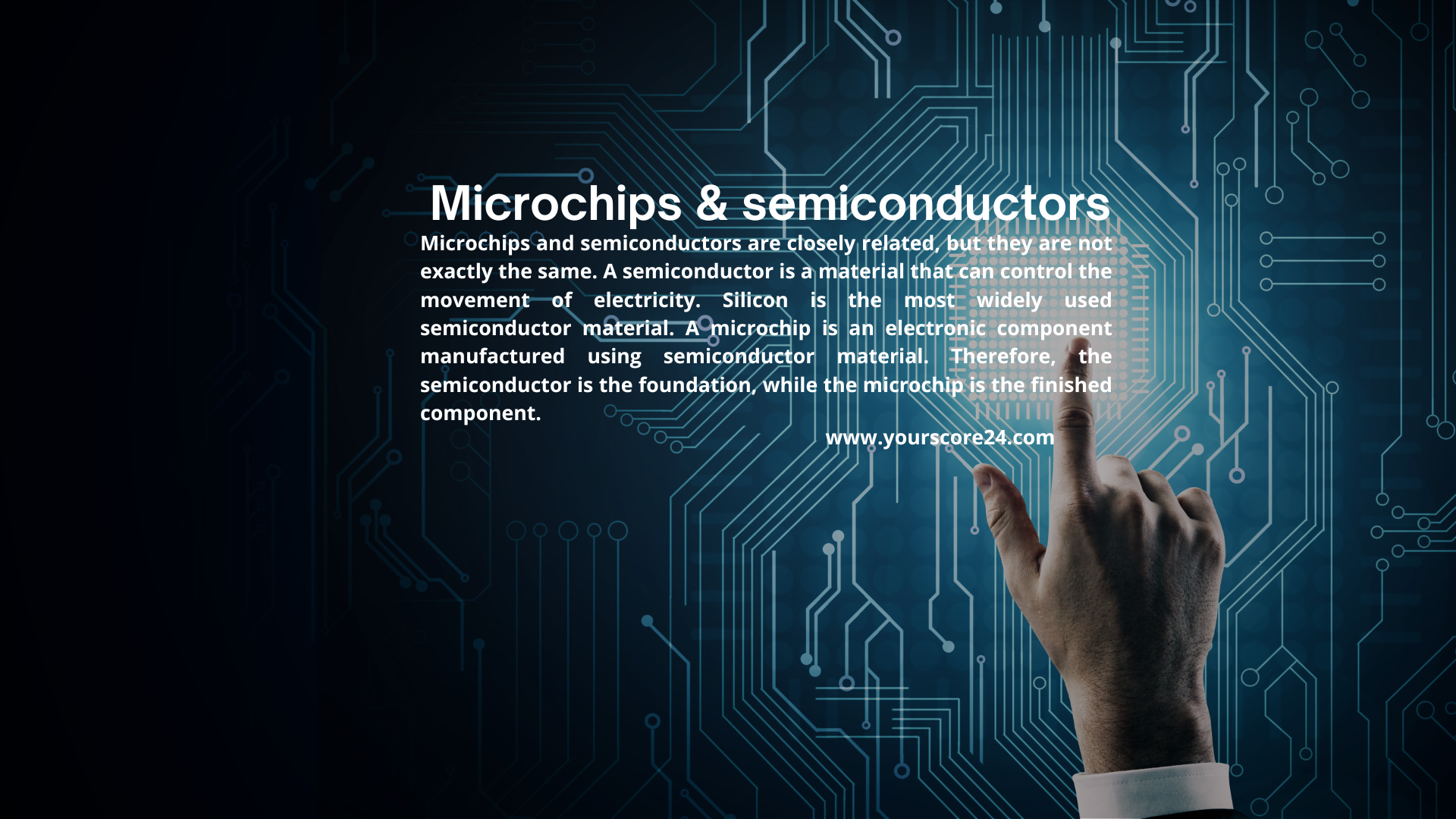
A microchip also known as a chip or integrated circuit, is a small electronic component usually made from semiconductor material such as silicon. It contains tiny electronic switches called transistors. These transistors control electrical signals, allowing electronic devices to process information, store data and follow instructions. Microchips and semiconductors are closely related, but they are not exactly the same. A semiconductor is a material that can control the movement of electricity. Silicon is the most widely used semiconductor material. A microchip is an electronic component manufactured using semiconductor material. Therefore, the semiconductor is the foundation, while the microchip is the finished component.
Before microchips were invented, electronic devices used large components called vacuum tubes. Early computers containing these tubes were expensive, consumed large amounts of electricity and occupied entire rooms. The invention of the transistor in 1947 made it possible to build smaller and more reliable electronic devices. However, manufacturers still had to connect individual transistors and other components separately. A major breakthrough came in 1958 when Jack Kilby, an engineer at Texas Instruments, created a working integrated circuit. In 1959, Robert Noyce of Fairchild Semiconductor independently developed a practical silicon-based integrated circuit with an improved method of connecting its components. Both men are recognised for their contributions to the invention of the modern microchip. Their work allowed several electronic components to be placed together on one piece of semiconductor material. Computer History Museum In 1971, Intel introduced the Intel 4004, widely recognised as the first commercially available programmable microprocessor. Originally developed for a calculator, it placed a programmable processing unit onto a small microchip and helped establish the foundation of modern computing. Intel Over the following decades, engineers created microchips containing millions and eventually billions of transistors. This progress made electronic devices smaller, faster, more powerful and more affordable. Different microchips are designed to perform different functions:
- Central Processing Unit (CPU): Executes instructions and controls a device’s main operations.
- Graphics Processing Unit (GPU): Processes images, videos, games and artificial-intelligence workloads.
- Memory microchips: Temporarily or permanently store information.
- Mobile processors: Power smartphones and tablets.
- Artificial-intelligence microchips: Perform machine-learning and AI calculations.
- Automotive microchips: Control vehicle systems, sensors, navigation and safety features.
- Communication microchips: Support Wi-Fi, Bluetooth, mobile networks and satellite communication.
The future of microchips will focus on greater speed, energy efficiency and processing power. Engineers are developing specialised microchips for artificial intelligence, quantum computing, autonomous vehicles and advanced communication networks. Manufacturers are also exploring new materials, three-dimensional designs and improved production methods. These developments could produce more powerful devices while reducing their energy consumption.
Login to join the conversation
No comments yet. Be the first to comment!